
If you’re looking for smoothies for weight loss, the goal isn’t to find one magic ingredient that burns fat. It’s to build a smoothie that actually works for your goals by including protein, fiber, fruits and vegetables, and healthy fats in portions that keep you full and satisfied.
The other big benefit is having an easy, make-ahead breakfast or meal that helps you get more nutrition into your day and makes it easier to stay consistent — and that’s exactly what a well-built weight loss smoothie can do.

Quick Look
- Best For: Breakfast, post-workout meals, meal prep, and quick meals when you need something easy
- Main Goal: Build a smoothie that is filling, balanced, portion-conscious, and easy to repeat
- Core Formula: Fruit + greens or vegetables + protein + fiber or healthy fat + unsweetened liquid
- Prep Method: Blend fresh or prepare freezer smoothie packs ahead
- My Routine: I drink a smoothie just about every morning and usually have it after my workout on exercise days
Why Weight Loss Smoothies Have Stayed in My Routine Since 2012

I started drinking smoothies in October 2012 while I was still losing weight and changing the way I ate. At the time, I was barely eating fruit and definitely not enough vegetables, so smoothies felt like an easy way to get more of both into my day.
Before smoothies, my fruit intake might have been an apple here and there. Now I can get more fruits and vegetables into my morning than I used to eat in an entire month. That is not an exaggeration.
Within that first week, I noticed I had way more energy, felt more hydrated, was less bloated, and just felt better overall. Honestly, I didn’t even realize how dehydrated I felt until I started drinking smoothies. And not to be overly dramatic, but I can say with a lot of certainty that smoothies really did change my life. They changed the way I ate, they changed the way I felt, and they became one of the easiest healthy habits for me to stick with.
When I first started, my smoothies were mostly fruit, greens, and chia seeds. Over the years, especially as I’ve gotten older, I’ve changed how I make them by adding more protein and healthy fats with ingredients like cottage cheese, plain Greek yogurt, protein powder, collagen, chia seeds, and nut butter. I still drink a smoothie almost every day, and that consistency is a big reason they’ve stayed part of my routine for so long.
If you’re new to smoothies, start with my How to Make a Green Smoothie guide. If you want more protein ideas, I also have a High Protein Smoothies guide and a full breakdown of Collagen vs. Protein Powder.
Enjoy!

Weight Loss Smoothie Recipes
If you’re here because you want a smoothie recipe to make right now, start here.
These are some of the smoothie recipes I’ve made and used over the years as part of my own weight-loss and healthy-eating routine.
I still recommend reading through the rest of this post because I’m sharing the things that have made the biggest difference for me over the years – how I add protein, where I get fiber, what keeps a smoothie filling, how I portion ingredients, and the simple formula I use now. But if you’re ready to blend something today, these are some of my favorite places to start.





See all of my healthy smoothie recipes.
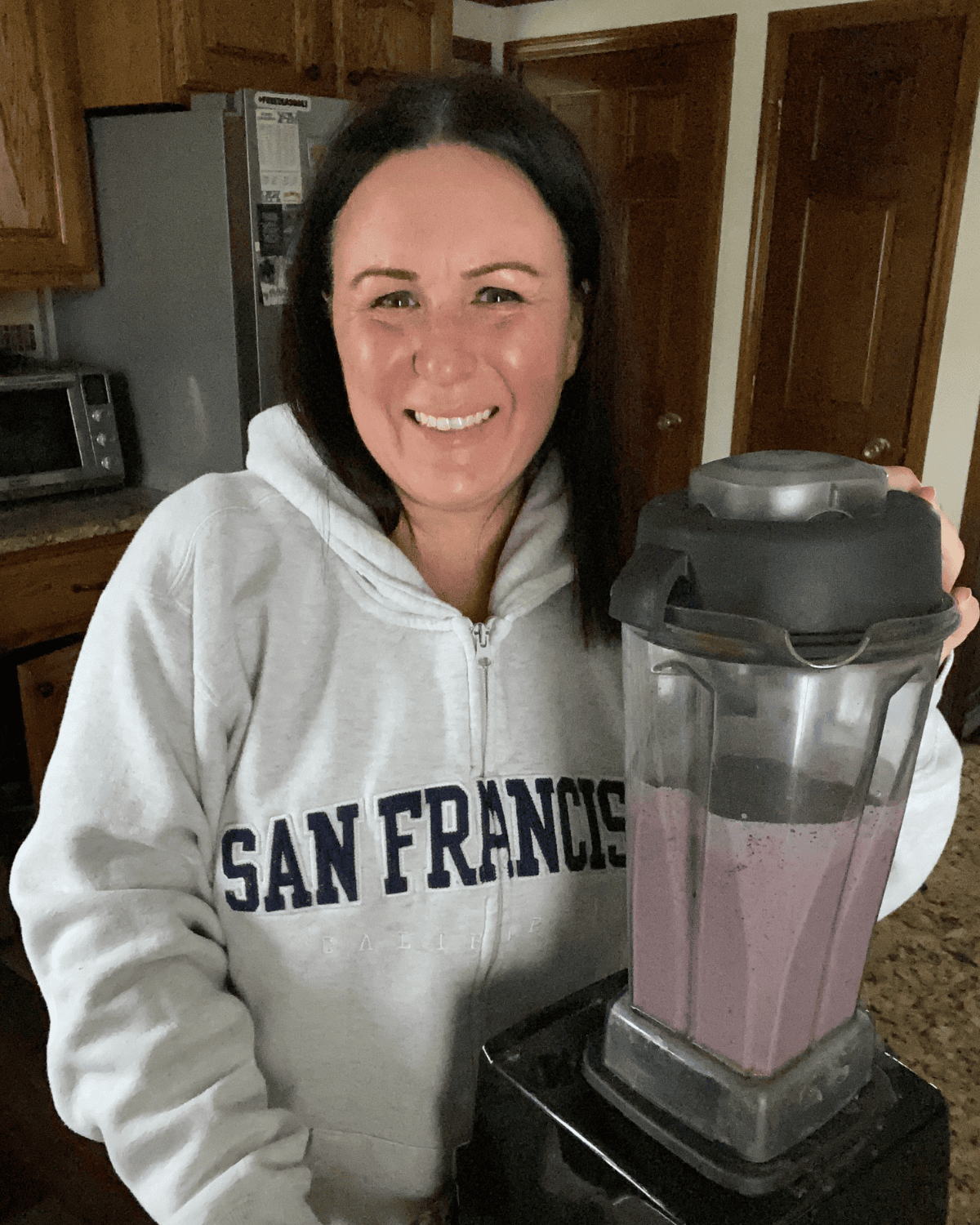
Fat Loss Smoothie Recipe Formula
- 1 ½ – 2 cups greens and vegetables – I’ll use 1 ½ – 2 cups of spinach and one small cucumber or celery stalk as a base.
- ½ – 1 cup of berries. I prefer a mix of blueberries, strawberries, raspberries, and blackberries.
- ½ of a banana – A lot of times, I’ll leave the banana out, but if I want extra sweetness, then I‘ll add ½ of a banana to my smoothie.
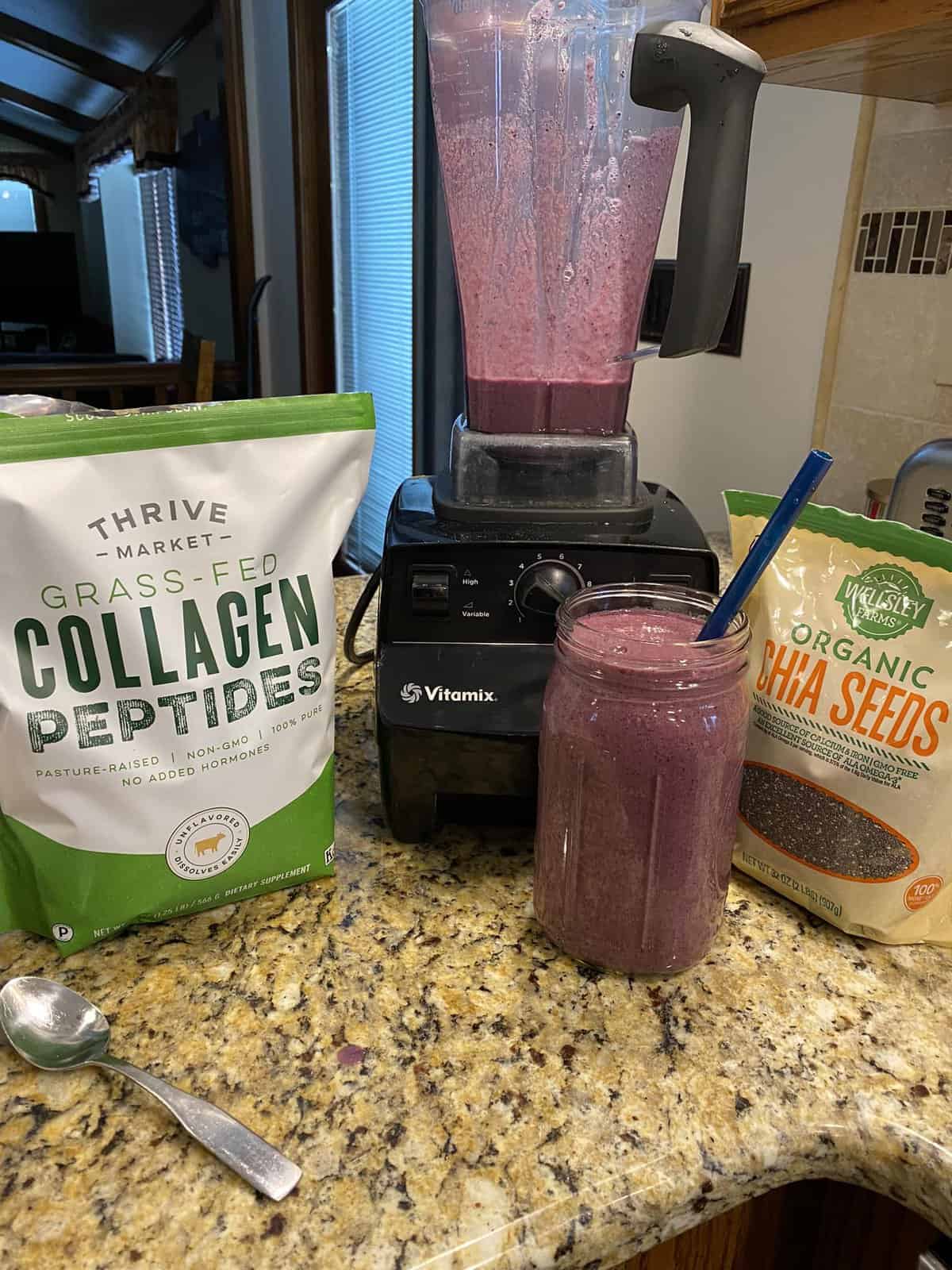
- Superfoods – Every smoothie I make gets 2-3 teaspoons of chia seeds for extra fiber, protein, and omega-3 fatty acids.
- One cup of liquid – It’s essential to use anti-inflammatory ingredients when making a smoothie, so I always use non-dairy milk like unsweetened almond milk or coconut milk.
Of course, you can switch up the ingredients to suit your taste, but that’s the formula I use when focusing on creating a weight loss smoothie recipe.
What Makes a Smoothie Weight-Loss Friendly?
After doing this for more than a decade, this is probably the biggest thing I want you to understand: smoothies can fit really well into a weight-loss plan, but they can also get away from you quickly if you are not paying attention to what is going into the blender.
Fruit, nut butter, seeds, yogurt, milk, protein powder, avocado, granola, coconut, and other smoothie ingredients can all be nutritious. But when you keep adding handfuls and spoonfuls without paying attention to portions, the calories, sugar, and fat can add up very quickly.
That does not mean you need to make a tiny smoothie or obsess over every ingredient. It means every ingredient should have a reason for being there.
Protein
If your smoothie is replacing breakfast or another meal, protein is one of the first things I would look at. I use plain Greek yogurt, cottage cheese, protein powder, milk, and other protein-rich ingredients depending on the smoothie.
For years, I was not a big protein powder person because I do not like stevia or artificial sweeteners. Then I found Garden of Life unflavored protein powder, and that changed my mind. It is the one I keep in my pantry when I want an easy scoop of extra protein without adding a strong flavor or sweetener. I also use it in my protein overnight oats.
I have also used collagen in my smoothies for about six or seven years, if not longer. I add it almost every day because it is easy to blend in and has become part of my routine as I have gotten older. I usually pair it with another protein source rather than relying on collagen alone. I explain the difference in more detail in my Collagen vs. Protein Powder guide.
Fiber
My go-to fiber sources are berries, leafy greens, chia seeds, whole fruit, and vegetables. I never use fruit juice as the liquid in my everyday smoothies because I would rather get the whole fruit and the fiber that comes with it. Flaxseed, hemp hearts, or oats can also work depending on the smoothie.
Healthy Fats
Healthy fats can make a huge difference in how satisfying a smoothie feels. I use ingredients such as chia seeds, nut butter, avocado, coconut oil, flaxseed, or hemp hearts. The important part is to measure them because these nutritious ingredients can add calories quickly.
Fruits and Vegetables
I use frozen berries all the time, along with spinach or kale, green apples, cucumber, small amounts of banana, mango, peaches, cherries, pineapple, and other fruits depending on the recipe. I do not think you need to be afraid of fruit. I just think you should be intentional with it. I usually stick with about one cup of frozen fruit and then add greens or vegetables instead of filling the entire blender with fruit.
Unsweetened Liquid
I typically use unsweetened almond milk, unsweetened coconut milk, another unsweetened milk, or water. Start with about one cup and add more only if you need it for the texture you want.
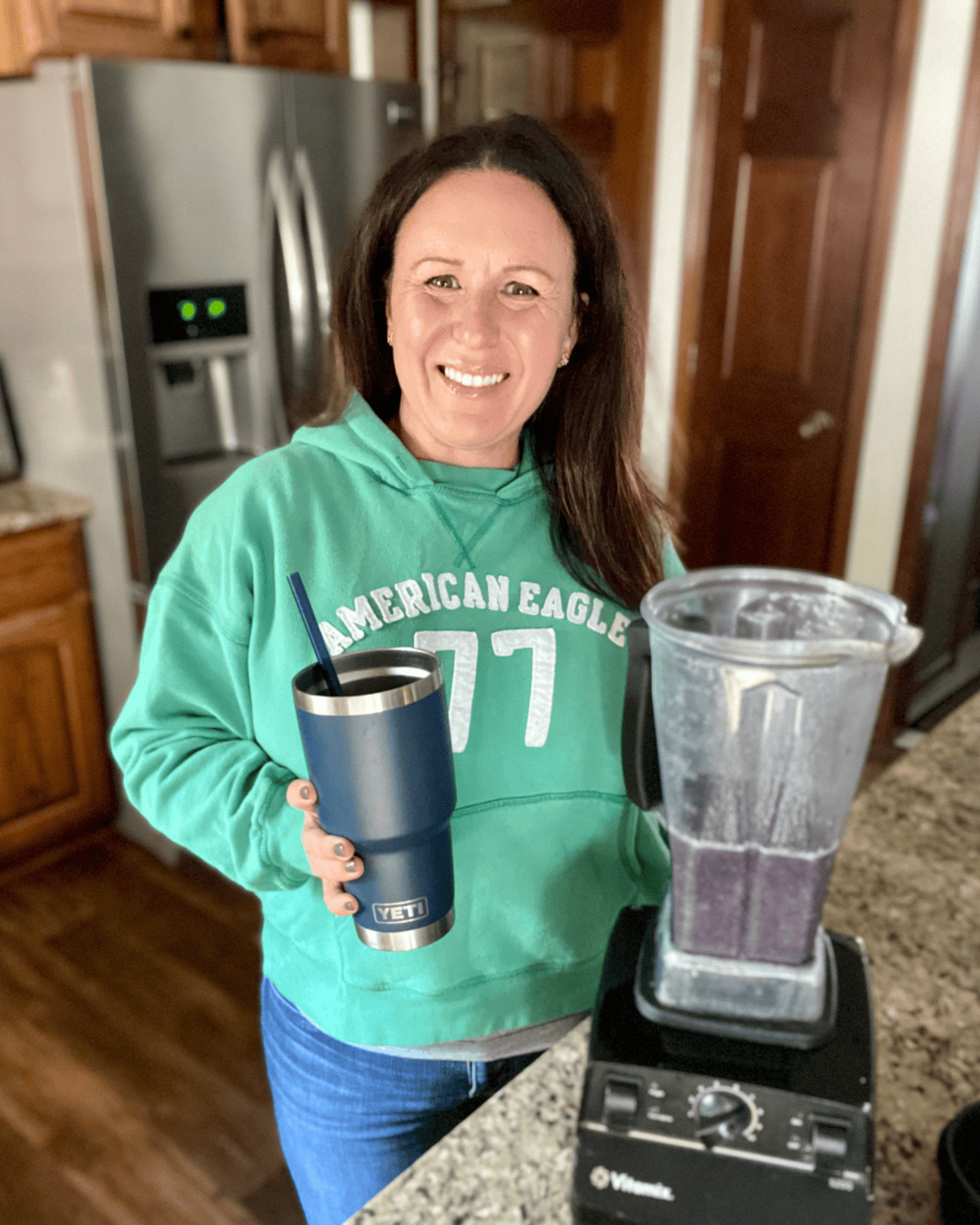
Supplies That Make Smoothie Prep Easier
- High-speed blender – I’ve owned my Vitamix since 2012, and it’s still going strong. If you plan to make smoothies regularly, I recommend investing in a high-quality blender. If a Vitamix is more than you want to spend, check out my recommendations for the best blenders for smoothies.
- Glass tumbler – I often use a 32-ounce mason jar for drinking smoothies. I also have this 24-ounce Ello glass tumbler.
- Reusable straws – These Ello reusable straws work great for smoothies.
- Straw cleaner – Definitely grab a straw cleaner to keep reusable straws clean.
- 20-ounce Yeti tumbler – I love using my Yeti tumbler to keep smoothies cold when I’m on the go.
- Reusable silicone bags – These are great for putting together freezer smoothie kits ahead of time.
Common Smoothie Mistakes I See All the Time When Trying to Lose Weight
If you are making smoothies because you are trying to lose weight, these are the things I would pay attention to first. None of them mean you are doing smoothies wrong. They are simply the places where I see people unintentionally turn a simple breakfast into something much bigger than they planned.
- Using Too Much Fruit. Fruit is nutritious, but you do not need three or four servings of it in one smoothie. I usually stick with about one cup of frozen fruit and then use greens or vegetables to add more volume.
- Skipping Protein. This is probably the biggest change I have made in my own smoothies over the years. When I first started, I was focused almost entirely on fruit, vegetables, and chia seeds. Now I make sure my smoothie has a real protein source, especially if I am using it as breakfast.
- Adding Too Many Extras. Nut butter, chia seeds, flaxseed, avocado, coconut, granola, protein powder, and other add-ins can all make sense individually. That does not mean they all need to go into the same smoothie. I ask myself what each ingredient is doing and whether I actually need it.
- Using Sweetened Liquids or Yogurt. Check the label. Flavored yogurt, sweetened almond milk, bottled smoothie bases, and some protein powders can bring in more added sugar than you realize. I usually keep the base plain and unsweetened and let the fruit provide the sweetness.
- Drinking a Smoothie on Top of Breakfast. This is one of the questions I have received most often over the years: Is the smoothie my breakfast, or do I drink it with breakfast? If you are trying to lose weight and your smoothie is substantial enough to be a meal, I recommend treating it like a meal. Build it with enough protein, fiber, and healthy fat to keep you full rather than drinking a full smoothie and then eating your usual breakfast on top of it.
Expert Tips From More Than a Decade of Using Smoothies for Weight Loss
After making smoothies part of my routine since 2012, these are the things I’ve learned that make the biggest difference – both for making a really good smoothie and for using them as part of a weight-loss routine.
- Use frozen fruit whenever you can. Frozen fruit gives smoothies that thick, cold texture without needing a ton of ice, which can water everything down. I usually keep frozen berries and other fruit stocked so I always have what I need.
- Start with less liquid. You can always add more, but once a smoothie gets too thin, it’s much harder to fix. I usually start with about a cup and adjust from there.
- Blend greens with the liquid first if needed. If your blender has trouble breaking down spinach or kale, blend the greens and liquid until smooth before adding frozen fruit and the rest of your ingredients.
- Pay attention to portions. Nut butter, avocado, seeds, coconut, protein powders, and other add-ins can all be nutritious, but they can also make the calories climb quickly. I measure these ingredients instead of just throwing them into the blender.
- Be careful with added sugar. I know I sound like a broken record with this, but it matters. Added sugar can sneak into flavored Greek yogurt, protein powders, almond milk, oat milk, and other ingredients that sound healthy. I usually stick with plain or unsweetened versions and let the fruit add the sweetness.
- Calories still count. A smoothie can absolutely fit into a weight-loss plan, but it isn’t a free pass for the rest of the day. I personally try to keep my meal smoothies around 300 to 375 calories most of the time, and then I pay attention to the rest of what I’m eating throughout the day.
- Make sure there is enough protein. This is probably one of the biggest changes I’ve made to my smoothies over the years. If I’m drinking a smoothie as breakfast or another meal, I want enough protein to help keep me full. I use ingredients like cottage cheese, plain Greek yogurt, protein powder, collagen paired with another protein source, milk, chia seeds, or nut butter.
- You do not need protein powder. I use it now, but I didn’t for years. If you don’t like protein powder, you can still build a filling smoothie with Greek yogurt, cottage cheese, milk, soy milk, nut butter, chia seeds, hemp hearts, and other whole-food protein sources.
- Build the smoothie for what you need it to do. If you just want a light snack, a simple fruit-and-greens smoothie may be enough. If it’s replacing breakfast or lunch, make it more substantial with protein, fiber, and healthy fat so you’re not hungry again an hour later.
- Have a high-protein snack ready if you need one. If you do get hungry a couple of hours later, I like having something simple ready instead of waiting until I’m starving. Some of my favorites are hard-boiled eggs, peanut butter chocolate energy balls, or a small portion of raw almonds or cashews. You can also check out my high-protein snack ideas for more options.
- Pair smoothies with exercise and strength training. Smoothies have always worked best for me as part of an overall healthy routine, not as the entire plan. I notice the biggest difference when I’m also staying active and doing regular strength training. You do not need anything extreme – even simple workouts with hand weights a few times a week can make a big difference in how strong you feel and how consistent you are.
- Prep ingredients ahead instead of blending days in advance. Freshly blended smoothies have the best texture. If you want to save time, I recommend making freezer smoothie packs so everything is portioned and ready to dump into the blender. That has been much more useful for me than blending several smoothies ahead and storing them in the refrigerator.

How to Meal Prep Weight Loss Smoothies
Smoothies are already quick, but prepping the ingredients ahead is what makes this habit almost automatic for me.
For the Week
If I am prepping just for the week, I portion the fruits, greens, seeds, and other freezer-friendly ingredients into individual freezer bags or containers. Then in the morning, all I need to do is dump one into the blender, add my liquid and any refrigerated ingredients, and blend.
If you absolutely need to blend your smoothie ahead of time, I would only do it the night before. Store it in an airtight mason jar or glass container in the refrigerator and shake it well before drinking. The flavor will still be good, but the texture will not be the same. Since it only takes a few minutes to blend a smoothie, I think prepping the ingredients ahead is the better time-saving strategy.
For the Freezer
This is my favorite way to prep smoothies. I buy fruits, greens, and other smoothie ingredients in bulk when I can, especially from BJ’s, Costco, or Sam’s Club, and then prep about three to four weeks of smoothie packs at once.
Add the measured fruits, greens, vegetables, seeds, and other freezer-friendly ingredients to individual freezer bags, reusable bags, mason jars, or freezer-safe containers. Leave out the liquid and anything you prefer to add fresh. When you are ready to make one, dump the pack into the blender, add your liquid and protein ingredients, and blend.
This keeps me from running out of spinach, berries, or whatever else I need halfway through the week. More importantly, it removes one more decision from the morning. I walk through the entire process in my How to Meal Prep Smoothies for the Week or Month tutorial.
There is no magical smoothie ingredient that causes weight loss. What has made smoothies so useful for me is that they make healthy eating easier to repeat.
Build your smoothie with intentional portions, enough protein, fiber, and healthy fat to keep you satisfied, and plenty of produce. Treat it like a meal when it is substantial enough to be one, prep your ingredients ahead so it is easy to stay consistent, and adjust the formula until you find the combination that works for you.
I started drinking smoothies in 2012, and all these years later they are still one of the healthiest habits I have been able to stick with. That consistency is the part that matters most.

Amber says
I’m trying to lose 30 pounds I’m a type 2 diabetic these smoothies have alot of carbs will tht mess my sugar up and will I gain weight or will I lose weight
Tammy Overhoff says
Hi there! It’s best to talk this over with your doctor to find out if drinking smoothies would be best for your condition.
Kathy says
So much good information plus the smoothies sound amazing! Thanks!
Barbara A says
So glad I’d found your website
Tammy Overhoff says
Omigosh thank you so much for this comment! I’m so glad you found me too!